
Best Manuka Honey UMF 20+: The Premium Tier, Compared
UMF 20+ is the premium tier of Manuka honey. The brands here all carry labelled MGO 829 mg/kg or higher and hold UMFHA certification.
Brand comparison
5 manuka honey brands, compared on label data
Cost per gram of MGO is the price of the jar divided by how many grams of labelled methylglyoxal it contains. Default order is lowest cost per gram of MGO first. This table compares label facts and prices; it is not an editorial ranking.
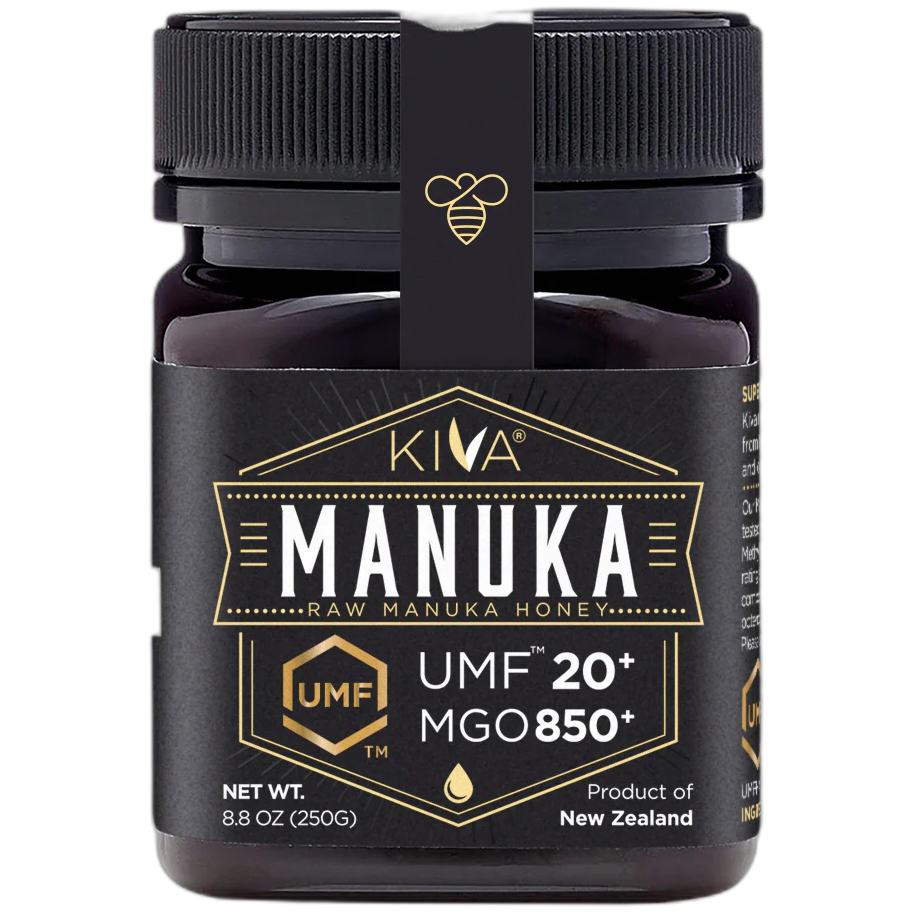 Kiva UMF 20+ Raw Manuka HoneyUMF 20+MGO 829250gNew Zealand
Price
From $69.99
Cost per gram MGO
$338
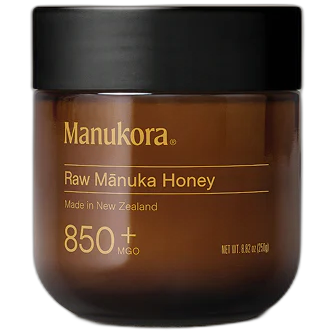
- Manukora UMF 20+ Manuka HoneyUMF 20+MGO 850250gNew Zealand
Price
From $74.99
Cost per gram MGO
$353
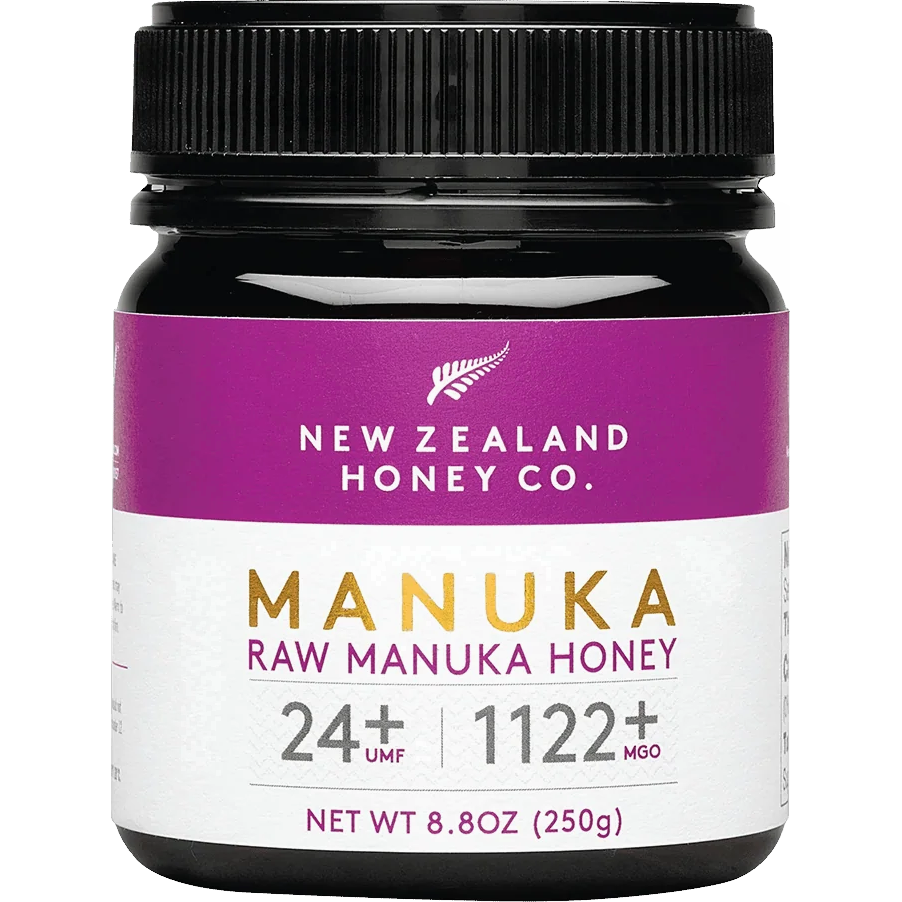
- New Zealand Honey Co. UMF 24+ Manuka HoneyUMF 24+MGO 1122250gNew Zealand
Price
From $99.99
Cost per gram MGO
$356
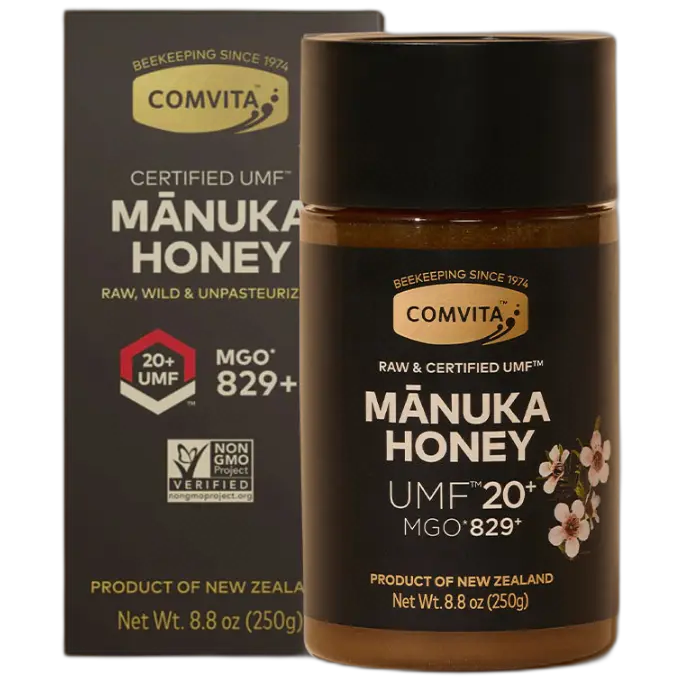
- Comvita UMF 20+ Manuka HoneyUMF 20+MGO 829250gNew Zealand
Price
From $79.99
Cost per gram MGO
$386
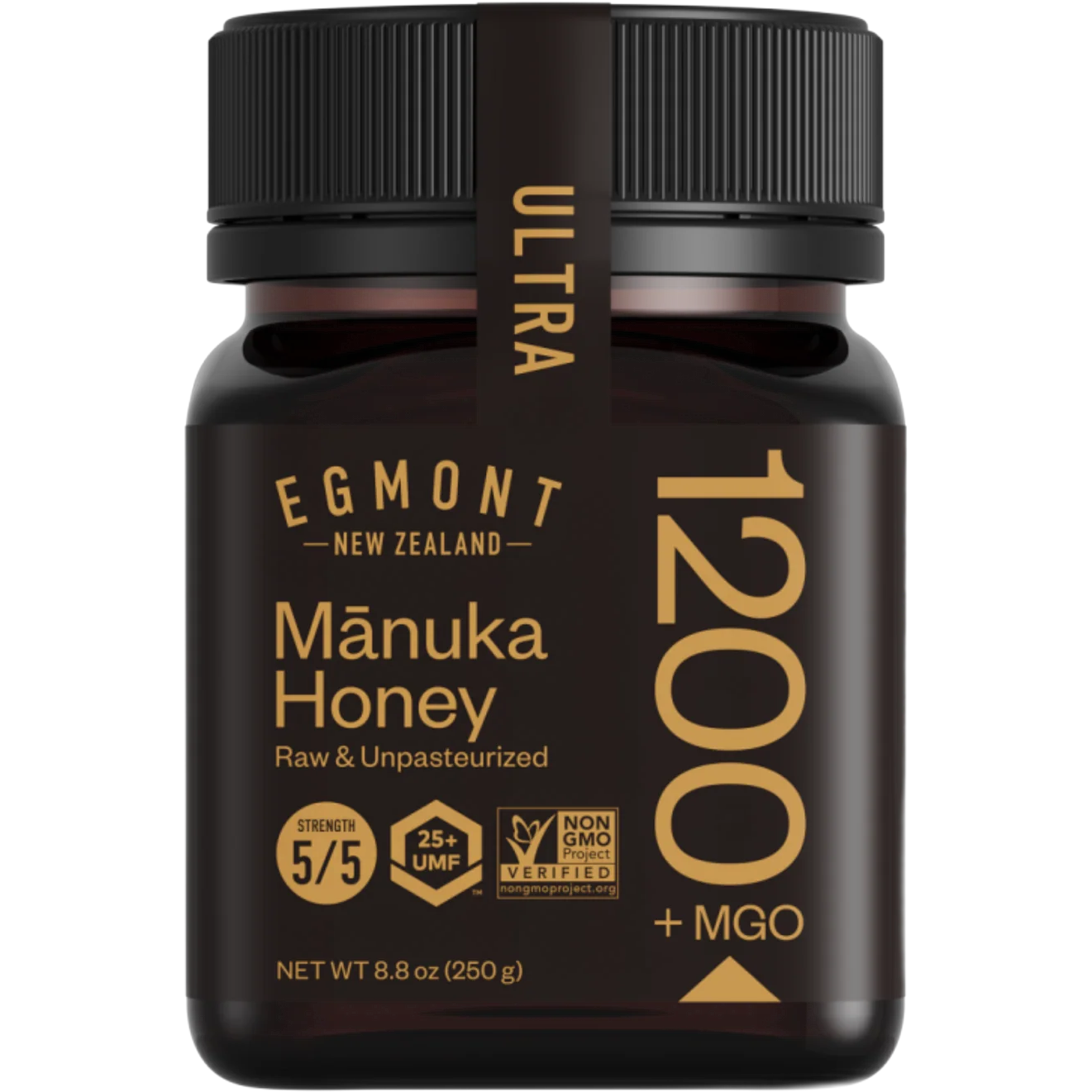
- Egmont UMF 23+ MGO 1050+ Manuka HoneyUMF 23+MGO 1050250gNew Zealand
What UMF 20+ actually means
UMF 20+ is the antibacterial-activity grade administered by the UMF Honey Association in New Zealand. A jar carrying that label has been independently tested and meets minimum thresholds for four authenticity markers: methylglyoxal (MGO, ≥829 mg/kg), leptosperin, dihydroxyacetone (DHA), and HMF (a freshness marker).
The MGO threshold is what most buyers care about. UMF 20+ corresponds to roughly the upper third of commercially available Manuka honey by potency. The next tier up is UMF 24+, which corresponds to MGO 1122+ and is rare and expensive.
Who needs UMF 20+ over a lower grade
UMF 20+ is the right tier if you specifically want the higher-MGO range that has been studied in laboratory antibacterial work (Mavric et al. 2008, Carter et al. 2016) and used in clinical wound-care research (Subrahmanyam 1991, 1993). For daily sweetening or general culinary use, UMF 10+ to 15+ is more than adequate and substantially cheaper.
The value calculation that matters at this tier is cost per gram of MGO, not jar price. A UMF 24+ jar at $120 can be cheaper per unit of active compound than a UMF 16+ jar at $40. The comparison table above sorts by this metric.
How this list is ordered
The table sorts on label data and price, not editorial opinion. For each jar on this list we have:
- Recorded the UMF and MGO values exactly as printed on the label
- Required a current UMF certification mark for inclusion
- Price-checked against the brand's direct-to-consumer site and the major US retailers
UMF certification is required for inclusion. Wedderspoon (KFactor system) and brands without UMF-certified MGO numbers are not listed in this specific roundup, though they appear on the main best-of roundup.
Common questions
Is UMF 20+ overkill for daily use?
Yes, by most measures. UMF 10+ provides reliable antibacterial activity at a fraction of the cost. UMF 20+ is the tier worth the premium when you specifically want the higher-MGO range.
Is UMF 24+ meaningfully different from UMF 20+?
It is meaningfully different in MGO content (1122+ vs 829+) and meaningfully different in price. Whether the additional potency is worth the additional cost depends entirely on your use case.
Why do prices vary so much between UMF 20+ jars?
Brand premium, jar size, distribution channel, and current MGO numbers within the UMF 20+ band (a jar testing at 1100 MGO costs more than one testing at 830 MGO, even though both are labelled 20+).
For the full UMF / MGO grading background, see our UMF explainer and our MGO explainer.